INTERVIEW

WORKING WITH ESPORTS ATHLETES: GRAHAM MILLER

INTERVIEW

WORKING WITH ESPORTS ATHLETES: GRAHAM MILLER

Graham Miller is the Global Insights Lead for Logitech Gaming and Creators. Graham’s fascination with people and trying to understand their confusing behavior pushed him to study psychology and sociology. His professional experience covers market research across every industry. At Logitech, his role is to bring the consumer voice (especially the Gaming and Creator cohort) into everything the brand does: across product development and innovation, all the way through to marketing.

Working with Esports Athletes: Graham Miller

What is the most rewarding part of working with esports athletes?

Logitech strives to meet the needs of all consumer types, but the esports athletes we work with are really the pinnacle of performance, of human potential. They really push us towards innovation because they have a completely different way of looking at the world and experiencing our products that we can learn from.

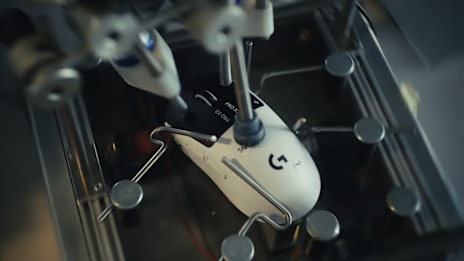
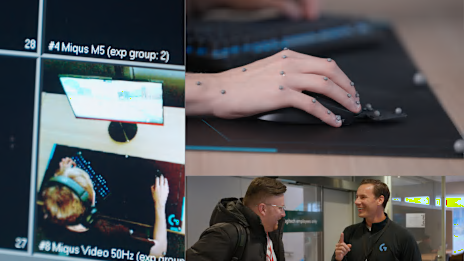
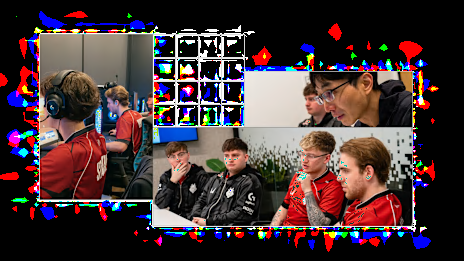
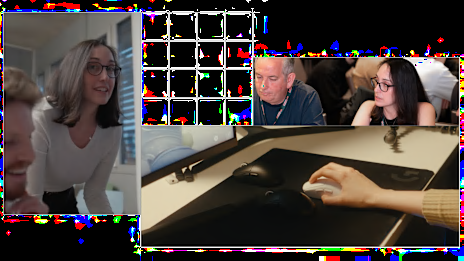
For instance, when our designers are modeling product shapes, to the human eye, they’ll lay out a group that all look identical. But when pros get their hands on them, they can tell minute differences straight away. Their way of articulating their feedback and our understanding of the space, lets us, together, create something even more powerful.

Hearing their perspectives and seeing them using our products is honestly fascinating to me. Seeing these players test products and eventually choose to compete and win with them – that's the most rewarding thing. Also seeing Logitech G products on the shelf, available for every type of gamer, is also really, really satisfying.

Why is it important that Logitech G considers pro players as athletes?

Because they are athletes. From an outside perspective, even if you're in the industry, you may not appreciate that until you're up and close with them. Their performance, how they think and their approach to training is worthy of that recognition.
 

They have a very different mentality and perspective to the same game than your ‘average gamer’ does. But when you design for the few, you also design for the many. Pros’ focus on competitive success leads us to innovate unique product experiences that end up benefiting all users of the product.
 

Most people are not going to have the opportunities to spend time with esports athletes like we have – so we view that time together as a great benefit to translate their insight and critique into top performing products for everyone.

Why is the ‘Designed with Pros’ process so important?

We are not pro players. Some of us are pretty good at games, but nowhere close to their levels. We're also not playing these games for 12 hours at a time. Esports athletes also need partners that understand and can implement their feedback, otherwise the products they need won’t get made. 

We couldn’t design such high-quality and well-loved products on our own without the collaboration with pros because we don't have the same needs and motivations. The diversity of athlete feedback we get is invaluable. Because pro players are not singular, they are all different.

From my perspective, understanding them is also key. Why do they play games in the first place? Why are they pro? What kind of emotional needs does that fulfil? All these different perspectives help us understand them more fully to build much more interesting products that meet current and anticipate future needs.

What is one moment working with pro players that has had the greatest impact on you?

I remember sharing Dev1ce’s feedback on very early foam mice shapes about which model he said was the most comfortable to the Head of Design at the time, who was confused by comfort being a competitive advantage.

So we went back to Dev1ce and through a line of questioning clarified that if he’s not comfortable, it impacts his immersion and removes the element of control because his head isn't on the game, his head is on this discomfort that he feels… therefore making comfort very important.

Connecting the dots and translating pro feedback into a bit more meaningful information for the design team is really rewarding. I especially love working with women athletes as well, they have so many more diverse needs and they love to share their opinions with us – plus, they are so much fun!